KM Sport Horses · Outwith Horses
The offer
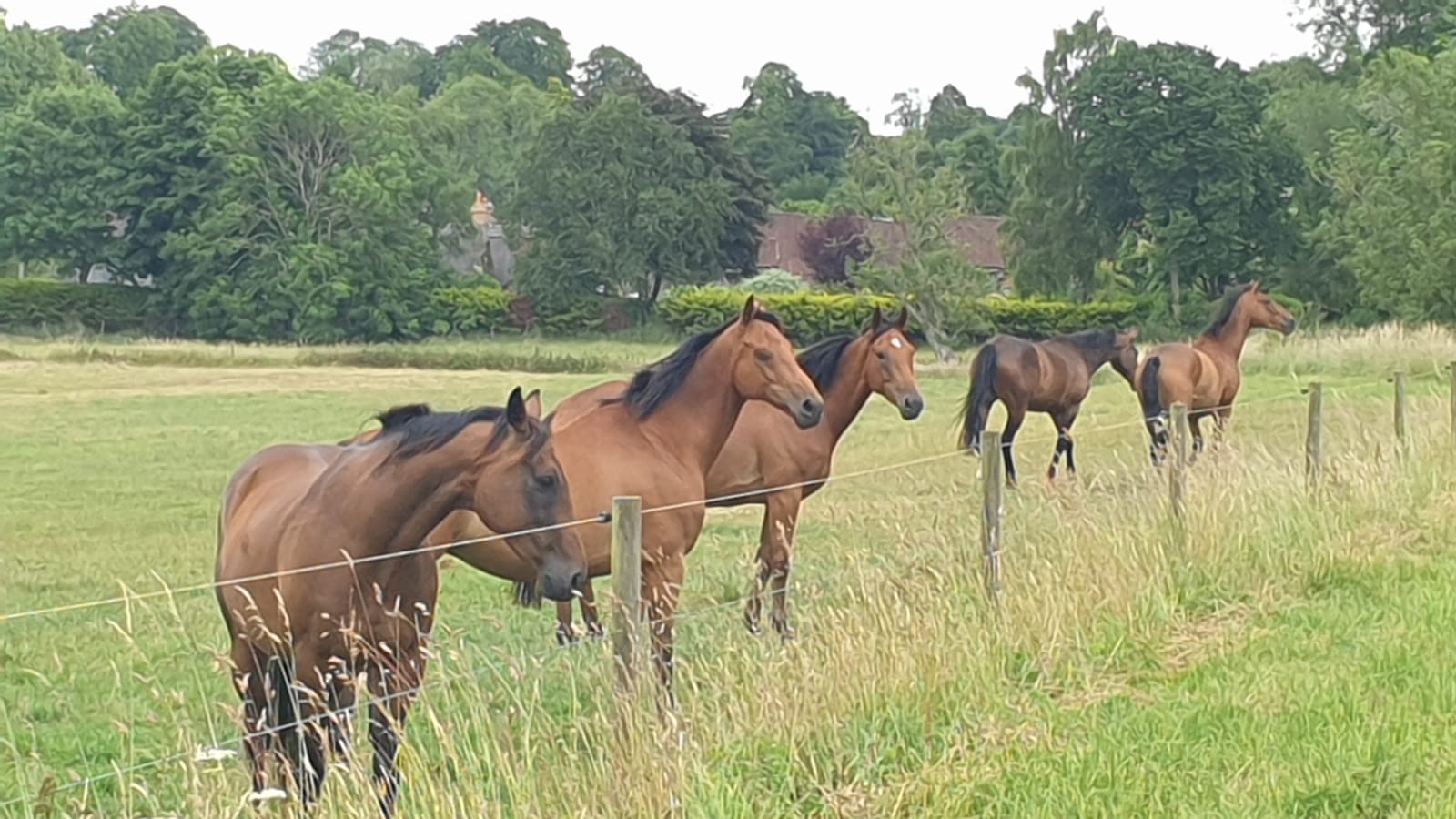
Grass livery at Windmill Hill means twenty-four hour turnout across 35 acres of Test Valley countryside, in a settled herd, with natural shelter and mature tree cover. Horses graze, move and keep company as they are built to.
What it does not mean is a horse left in a field. Everything routine is managed for you, your horse is seen twice a day by someone who knows it, and the way it joins the herd is planned rather than left to chance.
Every livery horse is looked after by Kate personally. There is no production line, and no horse is one of a crowd.
Full care grass livery
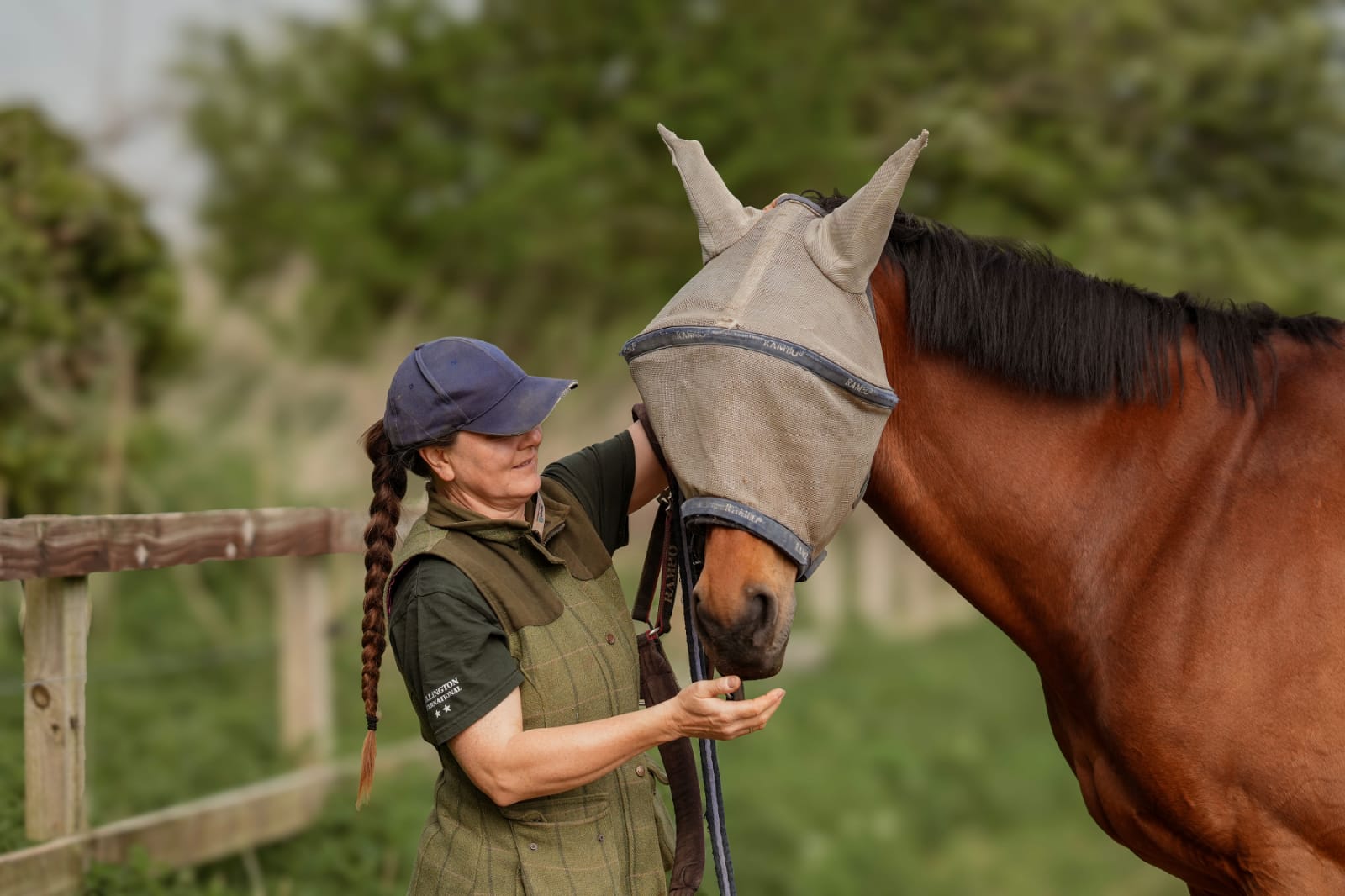
Twice-daily checks by someone who knows your horse and will notice when something is different. Worming programme managed and recorded. Vaccinations managed and kept in date. Farrier trims arranged and held for you. Rugging and unrugging as the weather requires, not to a calendar. Fly hoods and fly management through the summer. Sun protection and topical treatments applied for fair-skinned horses and those that need them. Hay fed through the winter months. Ongoing care advice from Kate whenever you want it, including an honest view when a horse needs something changed. Price on application.
Full care grass livery is for a horse that is turned away — resting after a hard season, recuperating, waiting between homes, or retired. The horse lives out and stays out. It is not brought in on request and it is not in work. That is the point of it: a horse that has been asked a lot of needs a stretch of time when nothing is asked of it at all. If you want to ride while your horse is here, or want it kept ticking over, livery with exercise is the tier that does that.
New arrivals are quarantined before they go anywhere near the group. Nothing is rushed. Integration into the herd is then staged deliberately — over the fence first, then with a carefully chosen companion, then the wider group — so that a new horse settles rather than fights for its place. Companions are selected to suit the individual horse, its temperament and its confidence, and the mix is adjusted if it is not working. Most injuries in group turnout happen in the first week, and almost all of them are avoidable. This is how they are avoided.
Grass livery here is not a stripped-back option. It is the same environment, the same daily attention and the same pair of hands that our rehabilitation horses receive — applied to a horse that simply needs a good home.
If your horse needs more
Both build on full care grass livery, and in both the horse is in work rather than turned away. Neither is a fixed package: what your horse gets is agreed with you and suited to the horse in front of us.
For owners who cannot ride as often as they would like, who want their horse kept in regular work, or who want to ride it themselves. Full care grass livery as above, but the horse is in work and accessible rather than turned away. An agreed number of ridden sessions each week by Kate — hacking, light flatwork, or simply keeping a horse comfortable and ticking over. The number of sessions is agreed with you and suited to the horse.
Your horse is brought in from the field for you by arrangement, so you can arrive and ride rather than spend half your visit walking out to catch it. Use of the 60m × 30m outdoor sand arena is included at no extra charge, as is use of the show jumps on site. Cross-country fences are on the yard, and competition-standard courses are available at a neighbouring farm by trailer or a short hack. Price on application.
This is training rather than exercise, and it is worth being clear about the difference. Five schooling sessions a week — backing a young horse, remedial work, rebuilding strength and balance after time off, or preparing to compete. The same long-reining, polework, hill work and progressive ridden work used to bring racehorses back into work, applied to any horse that needs it. It is not a hacking package. Delivered by Kate alongside full care grass livery, with the horse in work and accessible: brought in for you by arrangement, with the same free use of the arena, jumps and cross-country fences. Price on application.
The yard
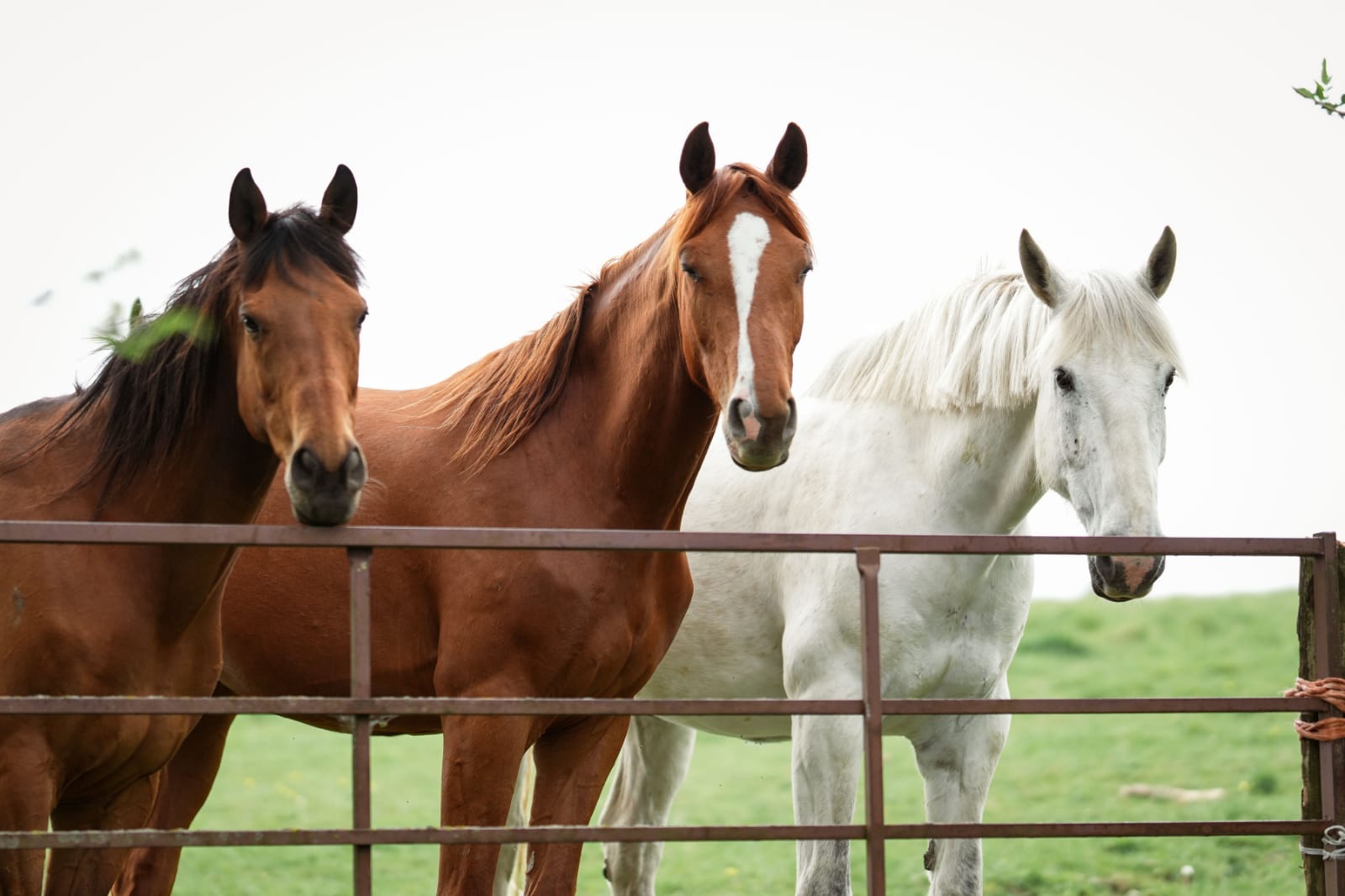
Thirty-five acres in the Test Valley, Hampshire, a few minutes from Andover. The paddocks range from large herd fields down to one-acre enclosures for a horse on restricted movement, all post-and-rail fenced with automatic mains waterers and natural shelter.
The barn holds open-sided pens with full visibility between horses, so a horse that needs to come in is never isolated. CCTV covers the barn for out-of-hours monitoring.
Close proximity to Lambourn gives access to first-class veterinary centres and surgeons, expert remedial farriery, and leading chiropractic and physiotherapy practitioners. We work with your existing plans, or help build new ones.
Facilities
Why here
Kate is BHS qualified and an RoR approved retrainer. Most of the year she is bringing horses back from tendon injuries, kissing spine, surgery and long layoffs — which means the person watching your horse in the field every day is used to spotting trouble early.
It also means that if something does go wrong, your horse does not have to move. Box rest, post-operative rehabilitation, remedial schooling and a return to work all happen here, with the same handler, the same field and the same companions waiting.
Very few yards can offer that continuity. It is the reason most of our liveries stay.
Enquire
Livery is worth choosing in person. Get in touch and come and walk the fields, meet the herd and ask whatever you want to ask.
It helps if you can tell us a little about your horse first — age, breed, how it lives at the moment, how it is in company, and what you want from the year ahead.